
Opus 5.5 vs Fable 5.2: Which Model Is Right for You?
Beginner guide to Claude Opus 5.5 vs Fable 5.2: side-by-side API prices, coding benchmarks, per-task cost math, 30-day retention rules, and 4-step DSH setup.
On this page
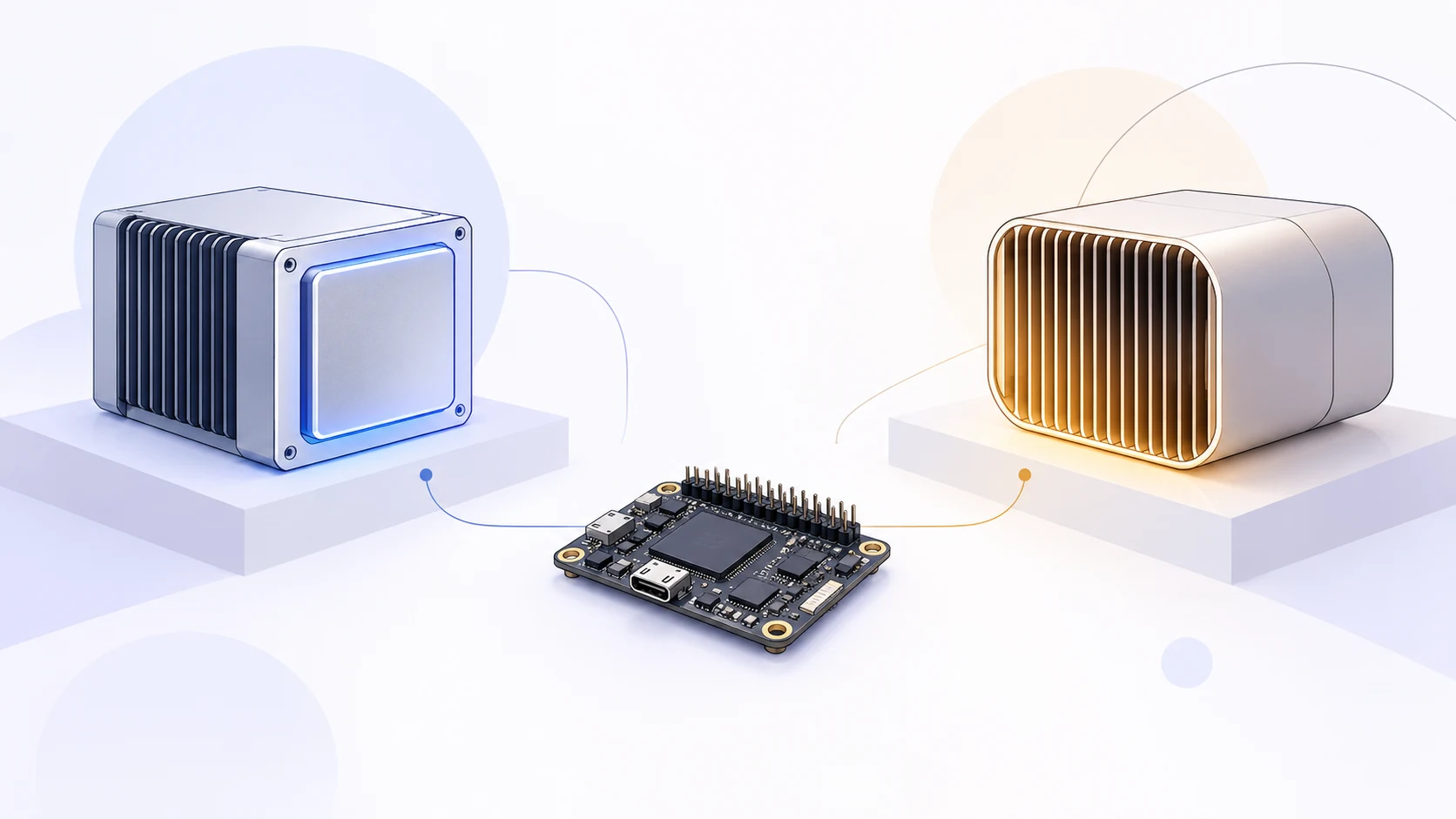
Seeing Claude Opus 5.5 and Claude Fable 5.2 side by side in Anthropic's model menu confuses almost everyone at first: "Why does 5.2 cost twice as much as 5.5—isn't a higher version number newer?"
They are two separate model tiers, not older and newer versions of the same tier. One plain comparison makes their roles stick:
- Claude Opus 5.5 is your full-time senior developer (
$4 / $20): reliable, reasonably fast, and built for 95% of daily coding, debugging, and document analysis. - Claude Fable 5.2 is the double-price specialist team (
$8 / $40): slower by default because it thinks longer and double-checks itself, built specifically for multi-hour, cross-repository problems where Opus gets stuck (see Anthropic's introduction to Fable 5.2).
Side-by-side comparison: Opus 5.5 vs Fable 5.2 (plus GPT-6.2 Astra)
Combining Anthropic's official Fable 5.2 API specs and Anthropic's published benchmark & cost report, here is how they line up:
| Feature | Claude Opus 5.5 | Claude Fable 5.2 | GPT-6.2 Astra (comparison) |
|---|---|---|---|
| API Model ID | claude-opus-5-5 | claude-fable-5-2 | gpt-6.2-astra |
| Context Window / Max Output | 1M / 128K tokens | 1M / 128K tokens | 1.05M / 128K tokens |
| Input / Output Price (per 1M tokens) | $4.00 / $20.00 | $8.00 / $40.00 (2x Opus) | $8.00 / $40.00 |
| Default Reasoning Effort | Medium (faster replies) | High (slower, deeper self-checking) | Medium default |
| FrontierCode 2.0 Score | 45.5% (Max effort) | 49.1% (Xhigh) / 45.3% (High) | Top-tier flagship peer |
| FrontierSWE v2 Score | 62.3% | 69.9% (+7.6 pts ahead of Opus) | Top-tier flagship peer |
| Privacy & Safety Rules | Standard commercial terms | 30-day default safety retention; stricter cyber/bio blocks | High preparedness monitoring |
Plain-English math: how can a 2x pricier model ever cost less per task?
Token for token, Fable 5.2 always costs twice as much: reading 1 million input tokens and writing 100,000 output tokens costs $6 on Opus 5.5 versus $12 on Fable 5.2.
So how did Anthropic report that on FrontierCode 2.0, Fable 5.2 (at High effort) finished tasks for roughly half the per-task dollar cost of Opus 5.5 (at Max effort)?
Because on brutally hard bugs, Opus maxed out its thinking budget spinning in retry loops, whereas Fable spotted the root cause with less than a quarter of the wasted tokens!
Never generalize that benchmark stat to everyday work: on routine coding and writing, Fable simply charges you 2x more for a job Opus—or even $2 / $10 Claude Sonnet 5.5—finishes cleanly on the first try.
4-step beginner workflow: pair Opus and Fable safely in DSH
At $8 / $40 per million tokens, handing Fable a vague prompt and walking away can burn $10+ in minutes. Use this 4-step guardrail setup inside DeepSeek Harness (DSH):
Step 1: Connect your Anthropic API key in DSH
Create an sk-ant-... key with prepaid credit at console.anthropic.com, open DSH on your computer, click Settings -> Models -> Add provider, and paste it into the built-in Anthropic card (step-by-step details in our DSH Anthropic Claude guide).
Step 2: Use Opus 5.5 first to map out the plan
Start in a claude-opus-5-5 session and ask it to inspect the repository and break the job into small, testable steps. Let Opus (or Sonnet) handle all the straightforward steps at half or quarter the cost.
Step 3: Give Fable 5.2 a "4-line checkpoint prompt" on the hardest step
Only when Opus fails twice on a gnarly root-cause puzzle, open a fresh session with claude-fable-5-2 and paste a structured brief with a mandatory pause point:
1. Goal: Find and fix the race condition in duplicate order charges.
2. Allowed files: Only edit files inside src/payments/; do not touch DB migrations.
3. Done when: Existing npm test passes plus one new concurrency unit test passes.
4. Checkpoint: Explain the root cause and your proposed diff FIRST, and wait for my approval before editing any files!Step 4: Check the 30-day retention rule before sending sensitive code
According to Anthropic's Fable safety docs, claude-fable-5-2 retains prompts and outputs for 30 days by default for safety monitoring, and enforces extra filters around cybersecurity and biology topics. Verify your organization's data-handling policies before sending confidential code to Fable.
Common questions
Why is Fable 5.2 more expensive than Opus 5.5 when 5.2 is a smaller number?
Opus and Fable are separate product lines with independent version numbers—like comparing a sedan's generation number to a heavy truck's generation number. Fable sits above Opus in Anthropic's lineup.
Do beginners learning to code need Fable 5.2?
Not at all. Beginners building apps, scripts, or personal projects are much better off using Claude Sonnet 5.5 ($2 / $10) or Claude Opus 5.5 ($4 / $20).
Why did Fable block or reroute a harmless security debugging prompt?
Fable 5.2 runs stricter automated classifiers on security-related and biological topics, which occasionally flag legitimate defensive security code. Switching that session back to Claude Opus 5.5 usually resolves false-positive blocks.
How can I test whether Fable is worth 2x on my own codebase?
Pick three real bugs that previously took hours to debug and run both models under identical conditions using our coding benchmark template, comparing pass rate and total dollar spend.
Model and workflow guides
Gemini 4 Neon is here. When is it worth switching models?
Compare Gemini 4 Neon in two coding setups, work through a $0.45 API example, and find Neon in Gemini, Google AI Studio, and Antigravity.
Read →Models and costsGPT-6.2 Astra & Sol Guide: Specs, Pricing & Choice
Beginner guide to OpenAI's GPT-6.2 Astra and Sol: Claude vs DeepSeek price table, plain-English benchmarks, 272K cliff, and step-by-step DSH & Python setup.
Read →Models and costsGPT-6.1 Terra Guide: Uses, Pricing and Sol Comparison
Beginner guide to OpenAI's GPT-6.1 Terra: half-price visual, computer-use, and writing model compared with Sol and DeepSeek, plus DSH and Python setup steps.
Read →Model setup and costsConnect Local Qwen 3.8 27B to DSH
Beginner guide to connecting local Qwen 3.8 27B to DSH: GPU memory table, LM Studio / Ollama / llama.cpp port setup, exact 5-field config, and error fixes.
Read →Model setup and costsCodex Costs: API Billing vs Subscription Usage
Beginner guide to OpenAI Codex costs: ChatGPT Plus login vs API-key billing table, real per-prompt dollar math, and 3 steps to lock a monthly budget cap.
Read →Model setup and costsConnect Grok API to DSH: Setup & Tools
Step-by-step beginner guide to connecting xAI's Grok API (grok-4.7) to DSH: Grok vs Groq comparison, exact 5-field custom provider setup, and 401/404 fixes.
Read →Model setup and costsChoose a Gemini Model by Task and Cost
Beginner guide to Google Gemini model selection: compare 3.8 Flash, 4 Argon, and DeepSeek prices, watch 2027 rate changes, and set up DSH in 4 simple steps.
Read →Model benchmarks and engineeringGemini 4 Argon Coding Benchmarks & 1M Window
Beginner guide to Google's Gemini 4 Argon coding scores vs Claude and GPT, how its shared 1M window and 65K output cap work, plus 4-step DSH setup.
Read →API costs and enterprise ROIGemini 4 Argon API Pricing, Cache & ROI Guide
Beginner guide to Gemini 4 Argon API pricing: Dec 2026 2x rate jump, how 95% auto-caching and thinking tokens bill, DeepSeek cost comparison, and calculator.
Read →Model setup and costsClaude Sonnet vs Opus: Which Should You Use?
Beginner guide to Claude Sonnet 5.5 vs Opus 5.5: side-by-side API prices, per-prompt cost math, clear rules on when to upgrade, and 4-step DSH setup.
Read →Content creationHow to draft a video script with Media Desk for DeepSeek Harness
Turn a phone note into a video script, cover, and storyboard with Media Desk for DeepSeek Harness. See how to install it, set up images, and export a draft.
Read →Mobile and remote accessUse DeepSeek Harness on Your Phone: Beginner Guide
Zero-jargon beginner guide to using DeepSeek Harness on your phone: find your computer IP, connect over home Wi-Fi in 2 minutes, or use Tailscale on 4G/5G.
Read →Model interfaces and workflowsMiniMax H3 vs M-Series in DSH: Which Works?
Beginner guide to MiniMax H3 vs M3 in DSH: why H3 is for video while M3 handles coding, how to avoid region 401 errors, and 4-step DSH setup instructions.
Read →API credentials and troubleshootingKimi API Key Errors: Region, Model and Permissions
Beginner fix guide for Kimi / Moonshot API key errors: match .ai vs .cn URLs, avoid retired model names and K3 Max typos, decode 401/404/429, and set up DSH.
Read →Image editing and toolsAI Image Editing: Prompts, Masks and Review
Beginner guide to AI image editing without ruining your subject: copy our 4-line prompt template, avoid PNG mask traps, inspect edges, and use DSH safely.
Read →